
Use Case
4
minute read
Between hockey bags, bikes, and winter layers, active families need a system that can handle constant rotation. See how Wally keeps the gear accessible and the floor clear.
Published on
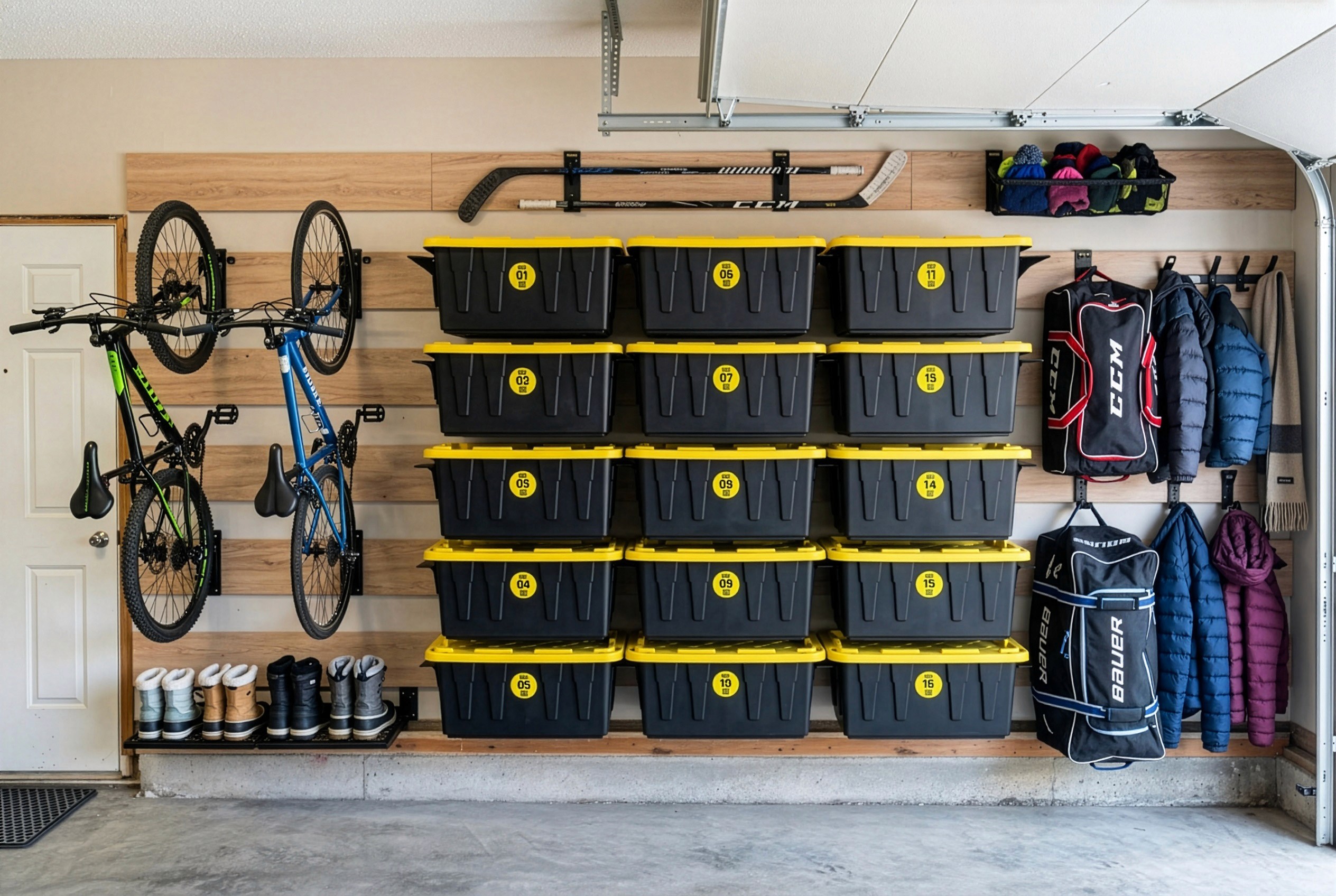
It is Saturday morning. The game starts in forty minutes. The coffee is barely kicking in, and the hunt for the left shin pad has officially begun.
The garage floor is a chaotic obstacle course of identical black bags, stray sticks, and mud. You know the gear is in there somewhere, because you tripped over it on Tuesday. But right now, when the clock is ticking and the tension is rising, the garage has failed you. Again.
This is the reality of the sports gear drop zone. It is not just messy; it is actively stressful. Traditional shelves just create a vertical pile, and digging through opaque bins feels like an archaeological dig you did not sign up for. You do not need better bins. You need a system that remembers where you put the tape.
The Invisible Toll of the Drop Zone
The problem with sports gear is that it never stops moving. It is not like holiday decorations that you pack away once a year and forget about. Hockey bags, soccer cleats, ski boots, and cycling helmets are in constant rotation. They leave the house, they get covered in dirt or snow, they come back, and they get dumped in the nearest available space.
Usually, that space is the garage floor.
When you rely on basic shelving or a loose collection of plastic totes, you are asking your brain to do too much work. You are asking it to remember exactly which unmarked bin holds the extra pucks, or which corner the tire pump rolled into. When you have a busy household and a schedule packed with practices and tournaments, your memory is already at capacity. The last thing you need is a pop quiz on storage locations at seven in the morning.
This constant mental load is the invisible toll of a disorganized garage. It turns what should be a simple exit into a frantic search mission. It leads to buying duplicates because it is easier to swing by the store than it is to empty three bins looking for something you know you already own. It turns the garage from a functional staging area into a source of low grade anxiety.
Why Traditional Systems Fail the Test
Most people try to solve the drop zone problem with more hardware. They buy heavier shelves. They buy bigger bins. They spend a weekend labeling everything with a marker.
But hardware alone cannot solve a retrieval problem.
Shelving units just elevate the pile. You still have to remember what is in the pile. Bins hide the mess, but they also hide the gear. And labels? Labels only work if you are perfectly disciplined about putting things back exactly where they belong, every single time. When you are hauling a heavy, smelly hockey bag out of the trunk after a late night game, discipline is the last thing on your mind.
The failure point is not the storage capacity. The failure point is the retrieval process. Traditional systems require you to remember where things are. They rely entirely on human memory, and human memory is flawed, especially when you are rushed.
The Wally Solution: Intelligence Over Hardware
Wally takes a completely different approach. It turns the drop zone into a searchable inventory.
Wally is not just a set of shelves. It is a smart, wall mounted bin system that combines space saving hardware with a fast, label free app. The goal is simple: you should be able to find anything in seconds, without relying on your memory.
Here is how it changes the Saturday morning routine. When you unload the gear after a tournament, you do not have to think about where it goes. You simply place the items in a Wally tote. Then, you use the Wally app to snap a quick photo of the contents. The app uses visual recognition to automatically identify the items and tags them to that specific bin on your wall. The process takes seconds.
The next time the panic sets in, you do not need to guess. You simply open the app and search for "shin pad" or "hockey tape." Wally directs you to the exact container. No guessing. No digging. No drama.
Engineering Built for the Real World
The physical system is designed to support the intelligence of the app. Wally uses heavy duty steel columns and secure metal clamps that lock directly into your studs. This is not flimsy plastic tracking. It is industrial grade hardware built to handle the weight of real life.
The floating design of the Wally grid keeps the gear off the concrete. This is crucial for active families. Damp gear needs air circulation, and a clear floor makes it incredibly easy to sweep away the inevitable trail of dirt, mud, and snowmelt. Your garage stops feeling like a damp storage locker and starts feeling like a clean, functional room.
Furthermore, the modular nature of the Wally system means it adapts to your life. As the kids grow and the sports change, you do not need to buy a new storage solution. You simply adjust the columns and totes to fit the new gear. The system scales with you.
The Payoff: Reclaiming Your Morning
The true value of Wally is not just a tidy garage. It is the peace of mind that comes with certainty.
The Saturday morning meltdown is canceled. The frantic searches are over. You reclaim your time, your sanity, and your floor space. You no longer have to apologize for being late because you could not find a piece of equipment.
With Wally, you stop digging and start living. You gain a reliable system that actually helps you get out the door on time, every time. Your garage becomes a space you control, rather than a space that controls you.
Book Your Free Consultation
No commitment required. Serving the Calgary area.